Archive for January, 2013

Film Review – Zero Dark Thirty

Posted in Uncategorized on January 30, 2013 by Reel Review Roundup

Zero Dark Thirty (MA)

Directed by: Kathryn Bigelow

Starring: Jessica Chastain, Jason Clarke, Kyle Chandler

Four and a half stars

Review by: Julian Wright

How do you make a 157 minute procedural with an already known outcome feel like a zippy, 90 minute, sweat inducing, white knuckle thriller? Director Kathryn Bigelow and writer Mark Boal seem to have found the winning formula with Zero Dark Thirty, which chronicles the 10 year hunt for al-Qaeda leader Osama bin Laden in the wake of the devastating World Trade Centre attacks in 2001. Getting into the nitty-gritty of the historical search, this is much more than an extended episode of CSI. In fact, Zero Dark Thirty has more in common with David Fincher’s breathtaking Zodiac (2007), which offered every gruelling aspect into the hunt for the unidentified 1970s serial killer. Bigelow too, follows very closely almost every minute aspect of the investigation from the promising leads to the frustrating dead ends.

It is to Boal and Bigelow’s credit (as it was to Fincher’s when he took the more is better approach), that they have not glossed over the set backs, the human errors, the behind the scenes screw ups that took place because, contrary to what you may think, these hurdles that continue to pile up just help to twist the screws of suspense even tighter. This wouldn’t feel like a genuine investigation of a real life case without the precious details. To skip the frustrating set backs in order to fast forward to the happy ending would be a disservice to all those that worked so hard to bring justice to the evil leader. We end up sharing the helplessness and frustration that the characters display so frequently, resulting in a richer cinematic experience.

zero1

Opening with a handful of haunting recorded 911 calls from victims trapped in the Twin Towers on September 11, the scene is set for the hunt that will consume the following 140 minutes and the characters involved. CIA operative Maya (Jessica Chastain) has spent her entire career since high school looking for the elusive leader of al-Qaeda from a desk in the United States. In light of the attacks on New York, Mya, who has plenty of experience but none in the field, is dropped into the centre of it at a Pakistan black site where her colleague Dan (Jason Clarke) tortures suspects for information on Osama Bin Laden. Sparking controversy, this 45-minutes of torture activity, with a rattled Maya hovering in the background waiting for the vital info to spill, has caused some to believe the film is pro-torture. But the means of extracting clues and leads in these sequences are anything but glorified. The horror is unsettling and the actions questionable. No one is encouraging the audience to cheer for more gore or torture devices to be wheeled out. The methods often lead to nowhere, an indication of its ineffectiveness.

Throughout the 10 years, Maya (understandably) goes through a gamut of emotions: enthusiasm, determination, loneliness, desperation, hopefulness, hopelessness, frustration, relief. It is a fitting showcase for Chastain’s vast talents to shine. Most actresses are only given the opportunity to express half these shades of emotions over several films. Chastain brings us a full character, one that is career minded (perhaps to a fault) and not interested in a personal life, but doesn’t lack personality and remains multi-layered. Bigelow’s handling of this woman in a man’s world is also fascinatingly understated. While Maya struggles to be recognised and heard amongst her male peers, she is able to, on many occasions, break through the glass ceiling – and yet no one is making a feminist point. Echoes of strong-willed but vulnerable Clarice Starling from The Silence Of The Lambs hang in the air, a similar procedural heroine that was treated like a woman and not a statement.

If the procedural elements aren’t exciting enough for you, there is the climactic sequence in which the team of Navy SEALs navigate bin Laden’s compound hideout in the dark. So rarely has silence been used so effectively and such film making skill been on display. The impressive sequence leads to the icing on the cake final moment we have with Maya once the dust settles. This isn’t about American flag waving and self-congratulatory back patting. Reinforcing this as a character study and an attempt to ask “was it all worth it?” as much as it is a recount of historical events, we are left with an exhausted, relieved yet strangely devastated Maya – a beautiful moment that concludes an insanely tense journey.
Film Review – Flight

Posted in Uncategorized on January 28, 2013 by Reel Review Roundup

Flight (MA)

Directed by: Robert Zemeckis

Starrig: Denzel Washington, Kelly Reilly, Don Cheadle, John Goodman

Four stars

Review by: Julian Wright

Welcome back, Robert Zemeckis! Well, not that he really went anywhere. The prolific director behind classics Back to the Future, Who Framed Roger Rabbit and Forrest Gump has been consistently creating films for the last 35 years. He has been a little distracted for the last 12 of them pouring his time and skills into some less than worthy projects – the animated, motion capture films The Polar Express, Beowulf and A Christmas Carol. Using real actors but pasting over them with CGI has generated strange results – stories have been able to be brought imaginatively to life, which is more than we can say for the dead looking characters. But this guy is all about extracting astounding performances from talented actors Tom Hanks (Forrest Gump and Cast Away), Jodie Foster (Contact) Christopher Lloyd (Back to the Future) and Bruce Willis (Death Becomes Her). Thankfully he has put his computer and those little green motion capture balls aside and decided to go back to capturing un-enhanced performances.

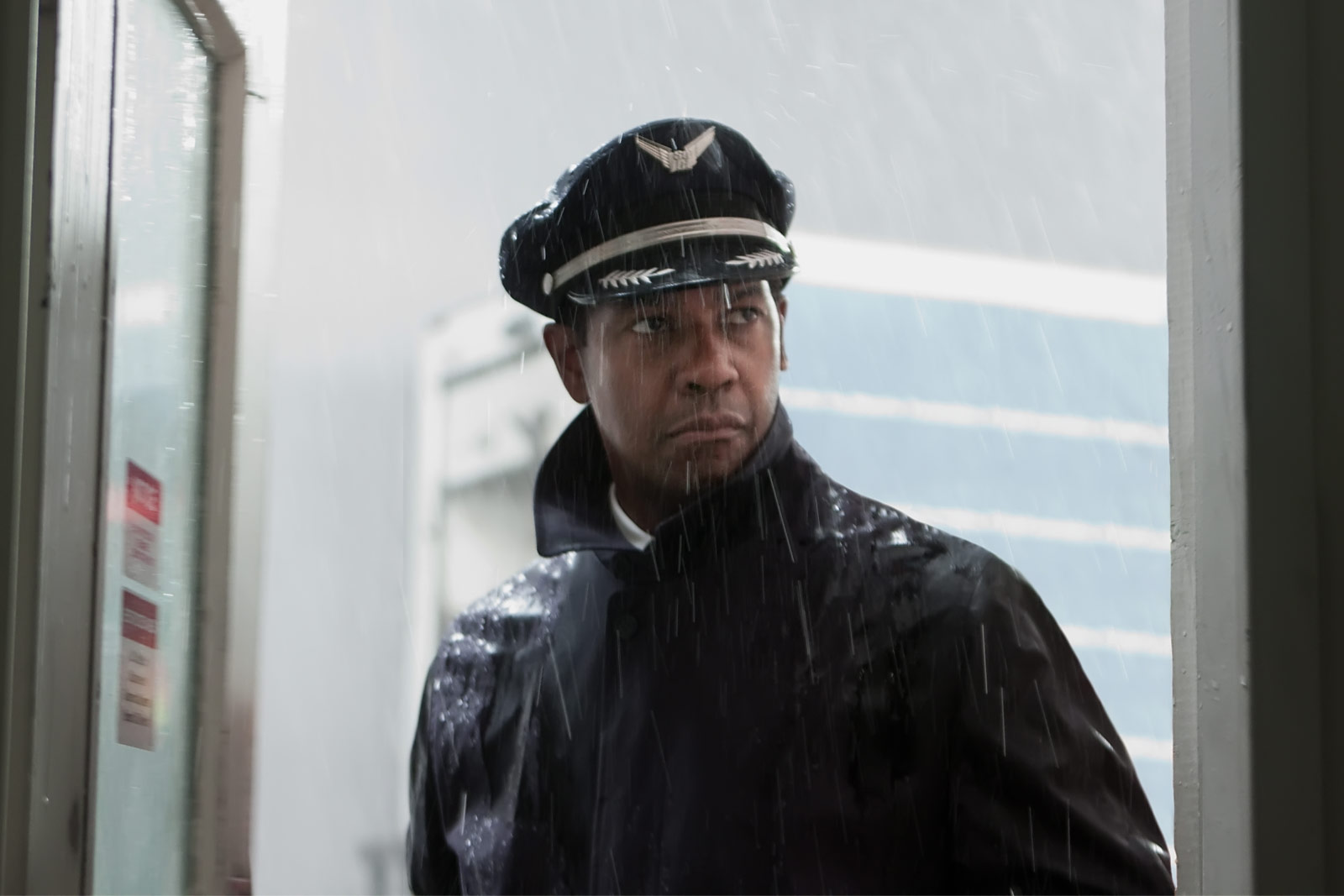
Flight, Zemeckis’ first film with humans to appear as themselves since Cast Away (2000), toys with addiction and morality as it explores the plight of a drunk, drugged up pilot who saves the majority of his crew and passengers when the plane’s engine quits mid-flight. As the aircraft nose dives to the ground, Whip Whitaker (Denzel Washington) flips the plane upside down to even it out before flipping it back up-right and crash landing it in a safer fashion. But was it the pilot’s skill that landed them safely or pure luck, seeing as the radical decision was made by an intoxicated man?

flight1

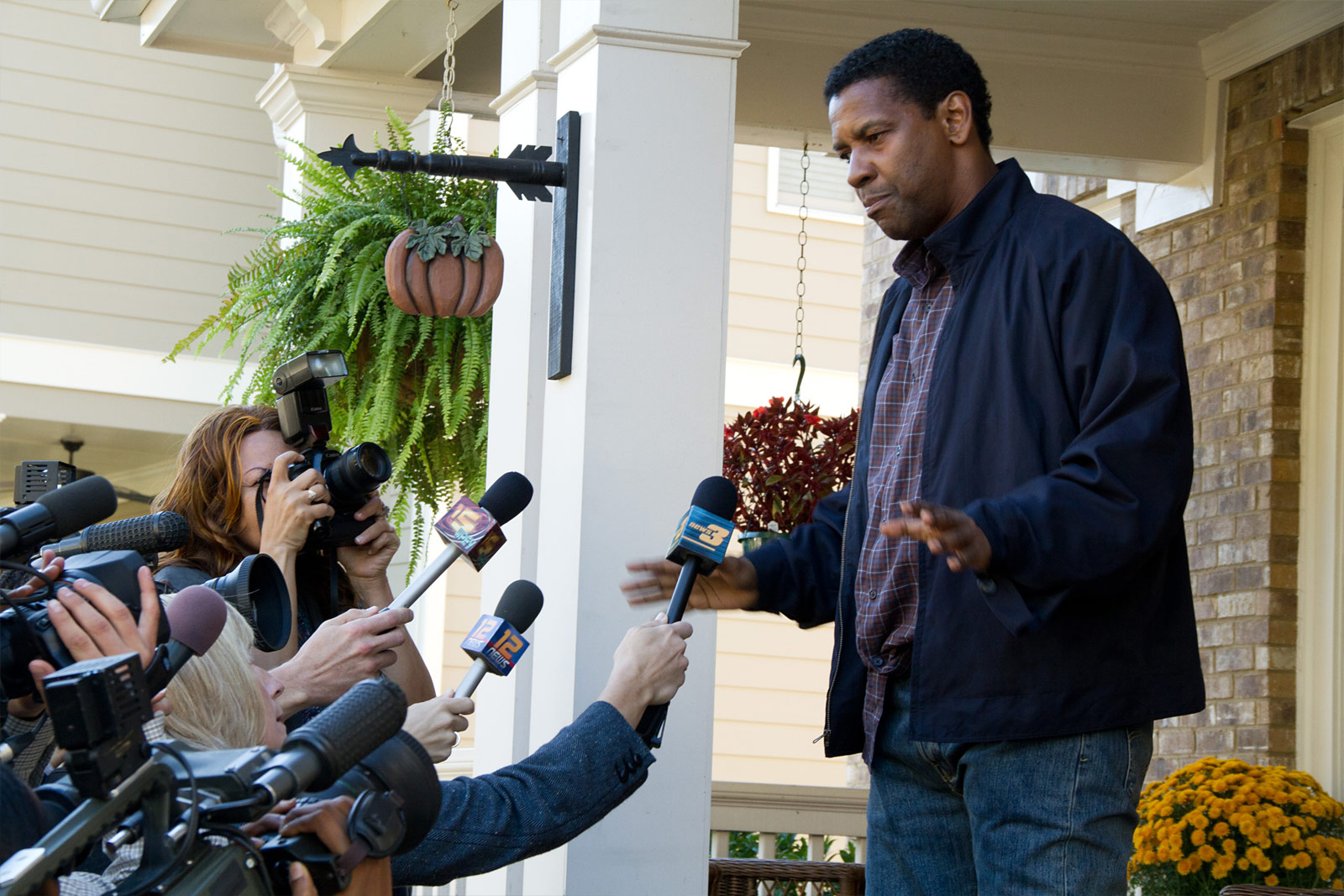
The act makes Whip a an international hero while the airline and its lawyer (Don Cheadle) work hard to cover up his blood alcohol content in the investigation. Meanwhile, the cocky pilot, who was never compelled to face his alcoholism even when his marriage failed or when it affected his relationship with his teenage son, hits the bottle harder as guilt sets in. The fateful turn of events leads him to meet drug addict Nicole (Kelly Reilly) who is far more interested in cleaning up her act than Whip. The dynamic of the relationship – she struggles to get her life together but it forced to watch her partner descend deeper into addiction hell – is not the main focus of the story (it could have been explored further) but is the heartbreaking centre. These two lost souls have found each other but it is their diseases, or their varying degrees of motivation to change, that keeps them apart.

flight2

Perhaps we are just used to seeing the soulless and creepy looking animated characters in Zemeckis’ last three films, but everything in Flight seems much more emotive, from the direction to the performances. There is heightened drama, and the soundtrack is rather intrusive, but Zemeckis is mostly interested in his lead performer and telling this story of the crippling inner struggle of an alcoholic. Washington also makes a comeback of sorts, tackling his meatiest role in at least five years, and delivering a much deserved Oscar nominated performance. Always solid in his action film choices, he goes the extra mile with this character.

Zemeckis doesn’t do himself any favours by injecting humour into this dramatic struggle (although John Goodman as the comic relief is fabulous); playing it straight would have made for a more effective film. It also goes a bit too far in the final minutes, but his attention to character and his determination to reveal the horrific behaviour of alcoholics and the impact they have on others  is still to be commended. This is some of the most serious stuff he has tackled and he has pulled it off.

Film Review – The Impossible

Posted in Uncategorized on January 28, 2013 by Reel Review Roundup

The Impossible (M)

Directed by: Juan Antonio Bayona

Starring: Naomi Watts, Ewan McGregor, Tom Holland

Three and a half stars

Review by: Julian Wright

I had heard the praise and I had heard the controversy. Australia’s delayed release of The Impossible, about the deadly tsunami that swept through Asia in 2004, meant we were getting it after the internet had already lit up amidst a storm of protest from many about adjustments the film makers had made to bring the story to the big screen. Their decision to narrow the scope and focus on the plight of one surviving family that were visitors to Thailand at the time the disaster hit and to change their race from Spanish to British caused quite a ruckus. A curious choice, one can assume for reasons of maximum audience appeal and box office success. Quite unfortunate.

I was willing to go along with it because there is much to explore with the fish out of water situation of a family in a strange land having to navigate not only a foreign landscape, but one that is devastated by the unexpected and sudden tsunami wave. That enduring fight to survive magnified in strange surroundings and also stripped of creature comforts such as phone communications, first class medical treatment and transportation after a horrific natural disaster. This isn’t to say that this particular family’s experience was more scary, dramatic or terrifying than those than anyone else’s, but one cannot deny there is room here for a confronting and heightened dramatic look at the devastating event.

impossible1

While it is deeply unfortunate that in this version, the story of the millions of families that lived in the affected areas and their triumphant spirit to rebuild after such devastation remains untouched, it is not a reason to dismiss The Impossible. There are countless sides to this story, and The Impossible is just one. However, director Juan Antonio Bayona does himself a disservice with some lapses in judgement that come off as insensitive oversights that threaten to undo his otherwise outstanding work.

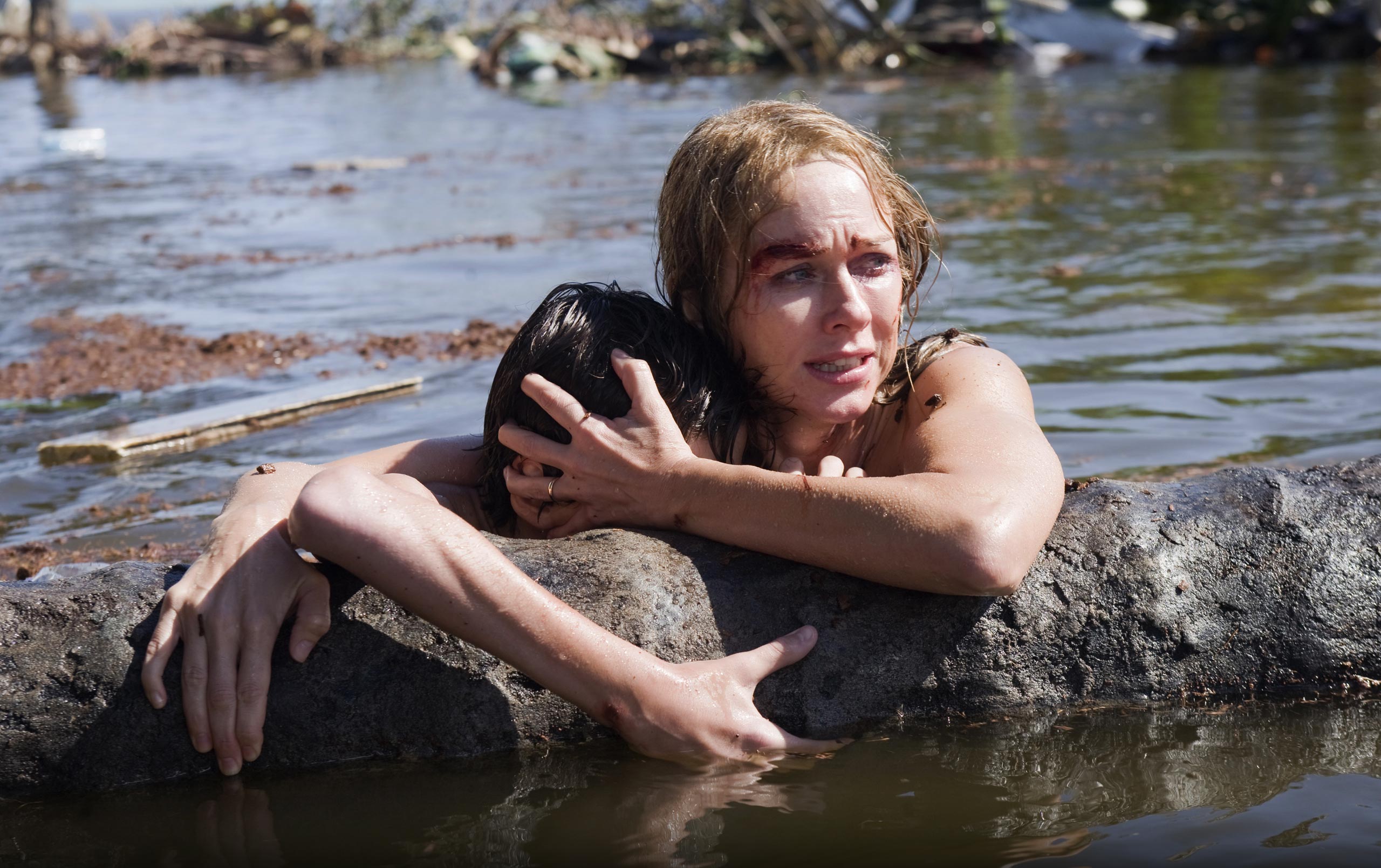
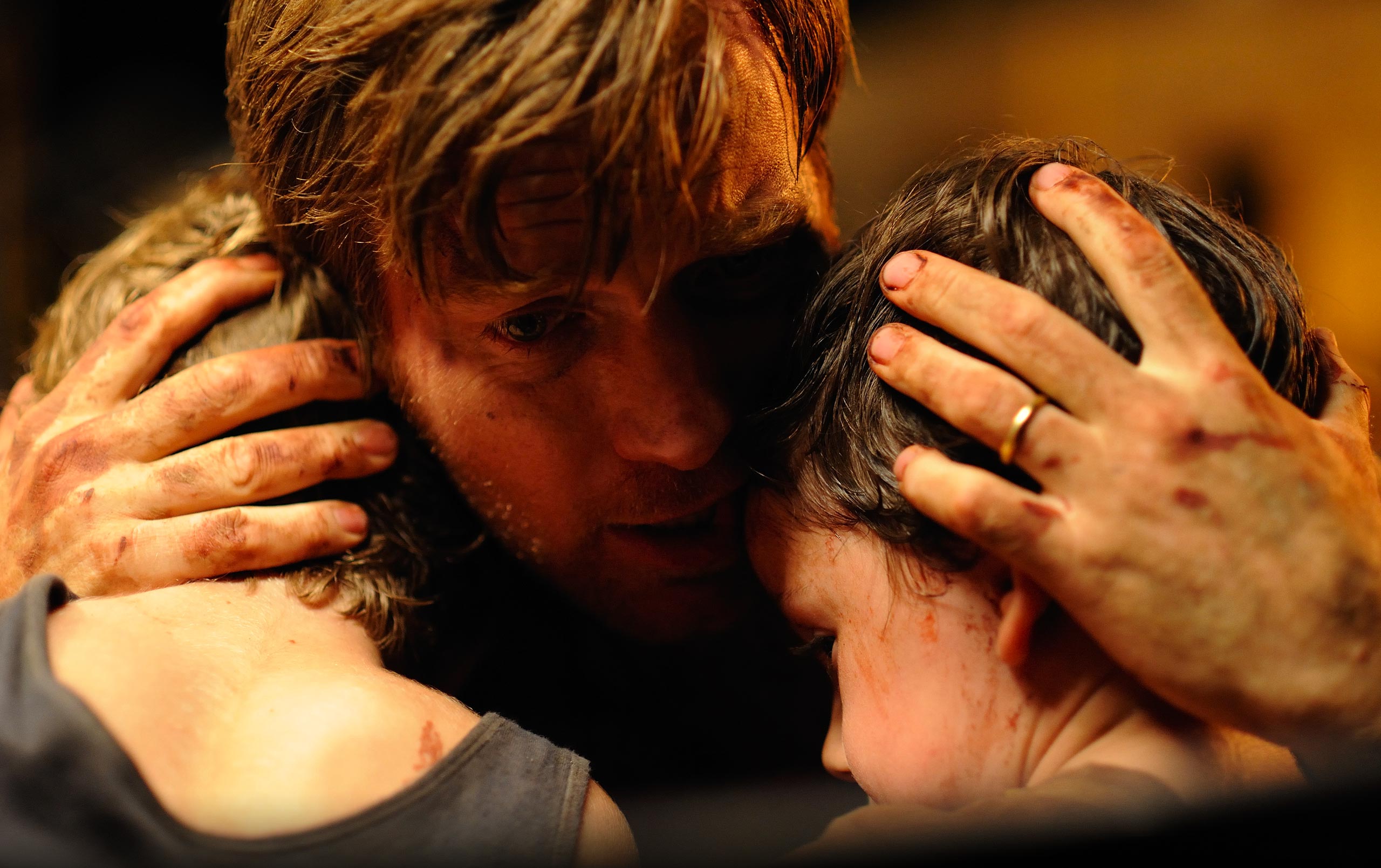
We are given a brief introduction to the holidaying Bennett family: Maria (Naomi Watts) and Henry (Ewan McGregor) and their three sons Lucas (Tom Holland), Thomas (Samuel Joslin) and Simon (Oaklee Pendergast) on a bumpy plane ride to Thailand (the nerves exposing  turbulence is a particularly on the nose opening) before they settle in their luxurious resort room. After exchanging Christmas gifts, the family frolic in the resort pool but their joy is cut short by a wave of ocean water that annihilates everything in its path and separates the family. Maria and Lucas manage to find each other while Henry has Thomas and Simon. The family must wade through all the death and destruction to seek medical help and find each other.

impossible2

Bayona doesn’t shy away from the horror of the situation with the extended wave sequence (revisited later in the film as a flashback), exposing his audience to graphic gaping wounds, and putting us right in the middle of the destruction with the characters. We see and experience what they do. It is a confronting and unsettling position to be in but absolutely necessary. Disaster films have never before felt so scarily authentic. But even after the water depletes, the fight to survive and reunite continues. The two parties of the Bennett family must try to find each other but it is like finding a needle in a haystack. There are thousands of others around them in the same situation and the only people many of these strangers want to help is themselves. Maria, who is badly injured, and Thomas are saved by friendly locals and taken to an overflowing, chaotic and questionable hospital where the language barrier is the least of their problems. Meanwhile, Henry sends his two boys to safer, higher ground with strangers so he can find his wife and eldest son.

While Bayona has made monumental achievements recreating the physical and emotional impacts of the disaster, other elements are sorely misconceived. The only other people the family encounter are English-speaking Caucasian tourists, save for the handful that save Maria and Thomas. Telling one family’s story is excusable, what isn’t is completely ignoring the people who lived there that had to endure its tragedy but also rebuild their lives and homes without many of their loved ones. Trying to spot an Asian face in the hospital scenes is harder than finding the striped character in the Where’s Wally? books. This heartless exclusion of native survivors leaves a bad taste, as does the final scene in which the Bennett family are whisked away on a private jet with so many empty seats while others on the ground, not just the locals but other doomed holidaymakers, are left to suffer. More than likely an accurate scene, but it leaves the viewer with a heavy heart and for all the wrong reasons.

There is no doubting the story is a hard-hitting one, that despite the racial alterations and careless exclusions, still has universal thematic appeal and manages to leave a deep impact. Just try not to shed a tear during this powerful telling of a horrifically upsetting but also uplifting story of hope and courage. It is impossible.

Film Review – West of Memphis

Posted in Uncategorized on January 20, 2013 by Reel Review Roundup

West Of Memphis (MA)

Directed by: Amy Berg

Starring: Jason Baldwin, Damien Echols, Jessie Misskelley, Peter Jackson, Eddie Vedder

Four and a half stars

Review by: Julian Wright

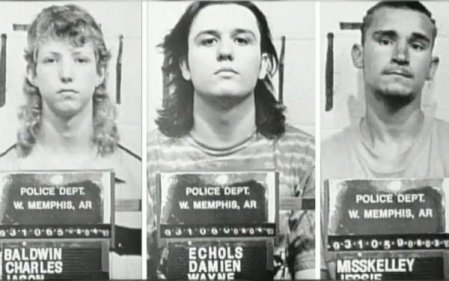
Every time a new haunted house thriller, disaster film, romantic comedy or remake is released, we always wonder if there is anything fresh left to warrant another entry. The same old clichés are usually trotted out time and again and we cling to hope for a glimmer of originality, a nugget of new insight or a novel element. And sometimes we are rewarded. Often, we are not. Anyone who has been following the captivating story of the West Memphis 3 may hope for the same. Is there anything left to uncover in the shocking and horrifying 1993 West Memphis triple homicide case in which three kooky teenagers, accused of being bloodthirsty cultists, were locked up for the murder and mutilations of three young boys despite so little evidence of their supposed guilt?

Not only has the media been tracking the revelations of the case for almost 20 years, but documentary film makers Joe Berlinger and Bruce Sinofsky spent years filming hundreds of hours of trial and interview footage almost from the get go and edited it all into three lengthy documentaries, the Paradise Lost series (the third one was released as recently as last year). By this point, it would seem no stone has been left unturned. I must confess that I have not seen the series, but apparently West Of Memphis producer Peter Jackson (yeah, the Lord of the Rings guy) and director Amy Berg (Deliver Us From Evil) found a few hitherto unknown stones and took a peek underneath.

west1

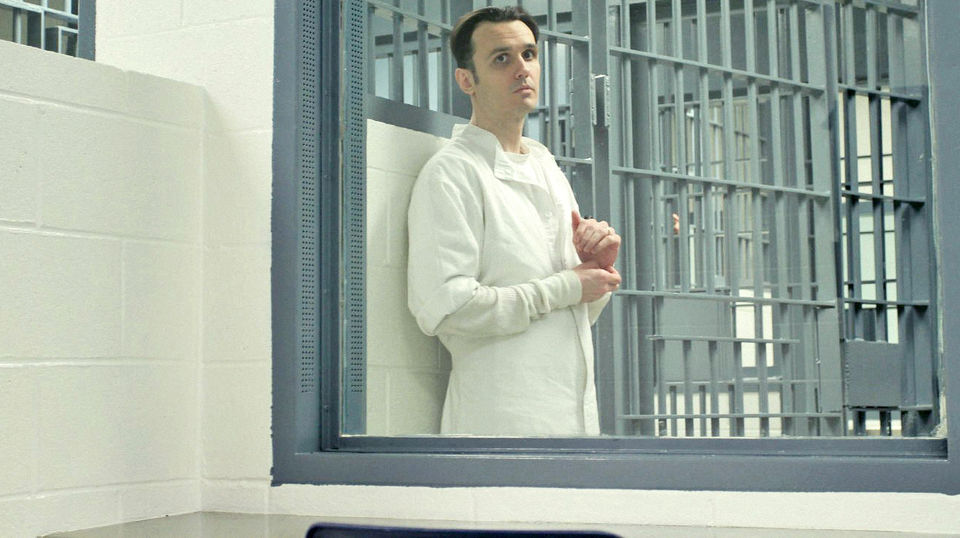
A quick Google search reveals that, unsurprisingly, West Of Memphis covers much of the same territory as Paradise Lost. It brings anyone unfamiliar with the saga up to speed with a truncated rehash of past facts (a coerced confession, satanic cult hysteria, botched investigations, false witness testimony, public and celebrity support for the convicted three) but delivered in a gripping fashion and up to present day. But for those that have endured the 400 minute long series, there are some surprises in store here, with some fascinating input from Jackson himself (who launched his own investigation), family history and past crimes revealed and fingers being pointed to a new suspect.

Being that this is mostly retrospective (Paradise Lost was filmed as the story unfolded), there is a lot of information to take in. With so many players by this point, despite title cards and constant reminders, it can often be hard to keep up with who is who, particularly when it comes to the countless people involved in the investigation and legal side of things. But extra care has been taken with this short hand introduction to the story to make it compelling as if it is being told for the first time. The facts are not rushed, graphic imagery is not shied away from and anecdotes not discounted. Given the number of years this has all been brewing and the running time the film makes have allowed themselves, it sometimes appears they have taken the “everything including the kitchen sink” approach. There is seemingly hard evidence, circumstantial evidence, trashy gossip, believable hearsay, disturbing domestics. And it simply sweeps you up into this world of mystery and intrigue, the plot of which get thicker and murkier.

west2

Berg makes us mock jury members in a faux retrial (a retrial that she and producers Jackson and Fran Walsh are fighting for with this documentary and believe is deserved), a thrilling position to be in, as we are allowed to pore over the old facts and recently introduced ones and make up our own minds. We become part of the fight for justice. Hollywood superstar Jackson’s involvement could have been a case of a rich, pompous film maker using his riches to help save a trio of poor, white trash. It certainly sounds that way when it is described. But Jackson is just as frustrated with the wrongful imprisonment and rigid legal system and curious as anyone else familiar with the case that wants to see this twisty mystery solved and justice served. And his investigation offers the fresh information this documentary needs to set it apart from Lost Paradise.

Not to take anything away from the years of hard work Berlinger and Sinotsky did on their series, I can only judge West of Memphis as someone who has not seen their work, but Berg has delivered a fascinating, chilling, haunting and moving investigation into the lives of the affected and a questionable legal system that has as many real life surprise twists as the true events in The Imposter, culminating in a heartbreaking, tear inducing and shattering conclusion. West Of Memphis is a sensational documentary in its own right, but it has encouraged me to fill in the gaps with Paradise Lost.

West Of Memphis is in limited release in Australia from February 14.

Film Review – Gangster Squad

Posted in Uncategorized on January 9, 2013 by Reel Review Roundup

Gangster Squad (MA)

Directed by: Ruben Fleischer

Starring: Josh Brolin, Ryan Gosling, Sean Penn, Emma Stone

Three stars

Review by: Julian Wright

Like it’s tommy gun-toting characters, Gangster Squad flirts with the fine line between good and bad, right and wrong. While it is a moral struggle that plagues the group of cops turned vigilantes, it is the confused tone that conflicts the film. After making his mark with the screwball-horror genre hybrid Zombieland (2009), director Ruben Fleischer attempts to mix flavours yet again – the light with the dark – but finds it a greater challenge when not dealing with flesh-eating ghouls. Trying to find a place for laughs in a 1940s “true crime” setting seems to be something that baffles him. His modern sense of humour struggles to exist in the noir context, coming off as an oppressed entity, battling to be relevant amidst the spray of bullets and blood and lush detail of the time recreated.

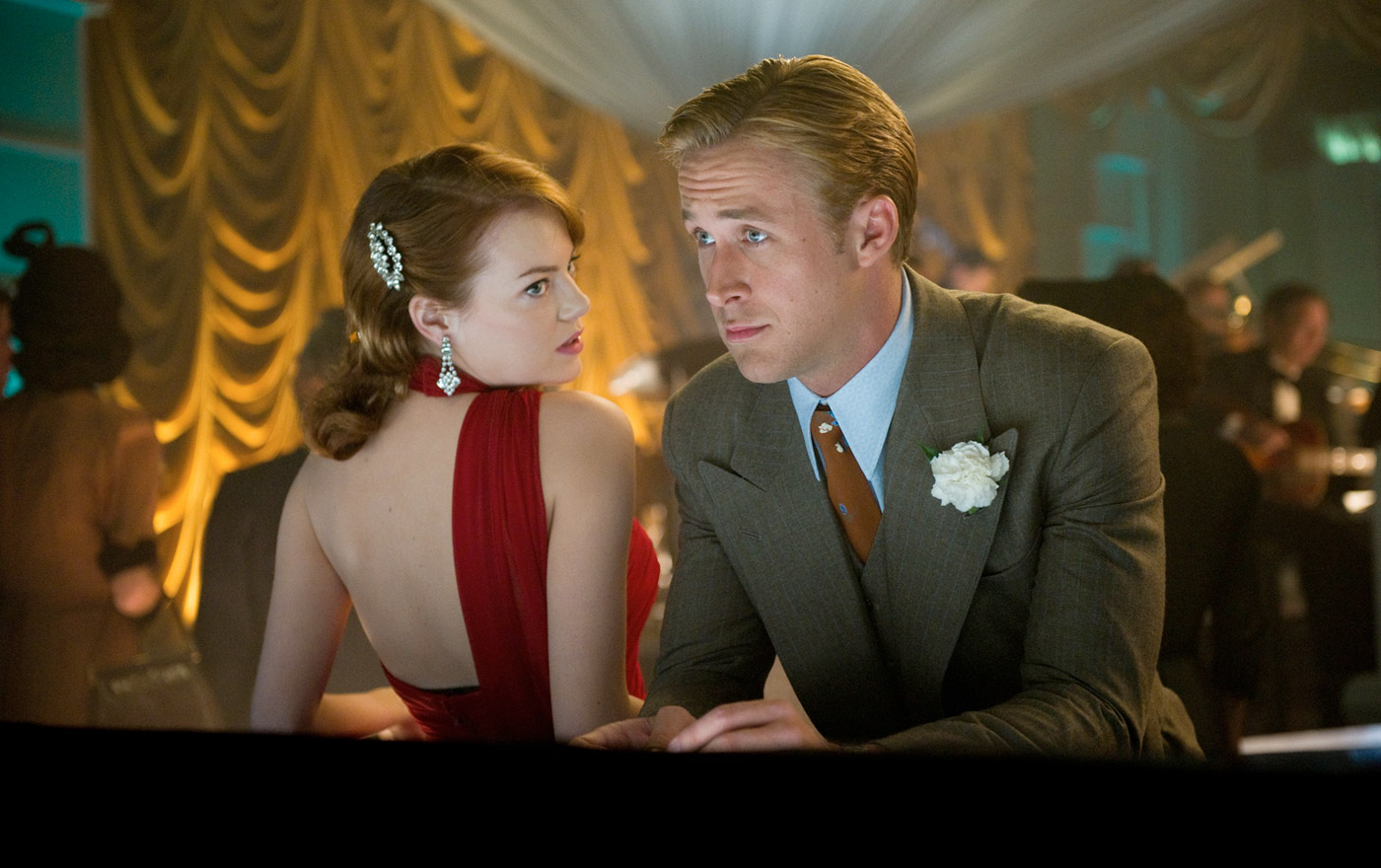
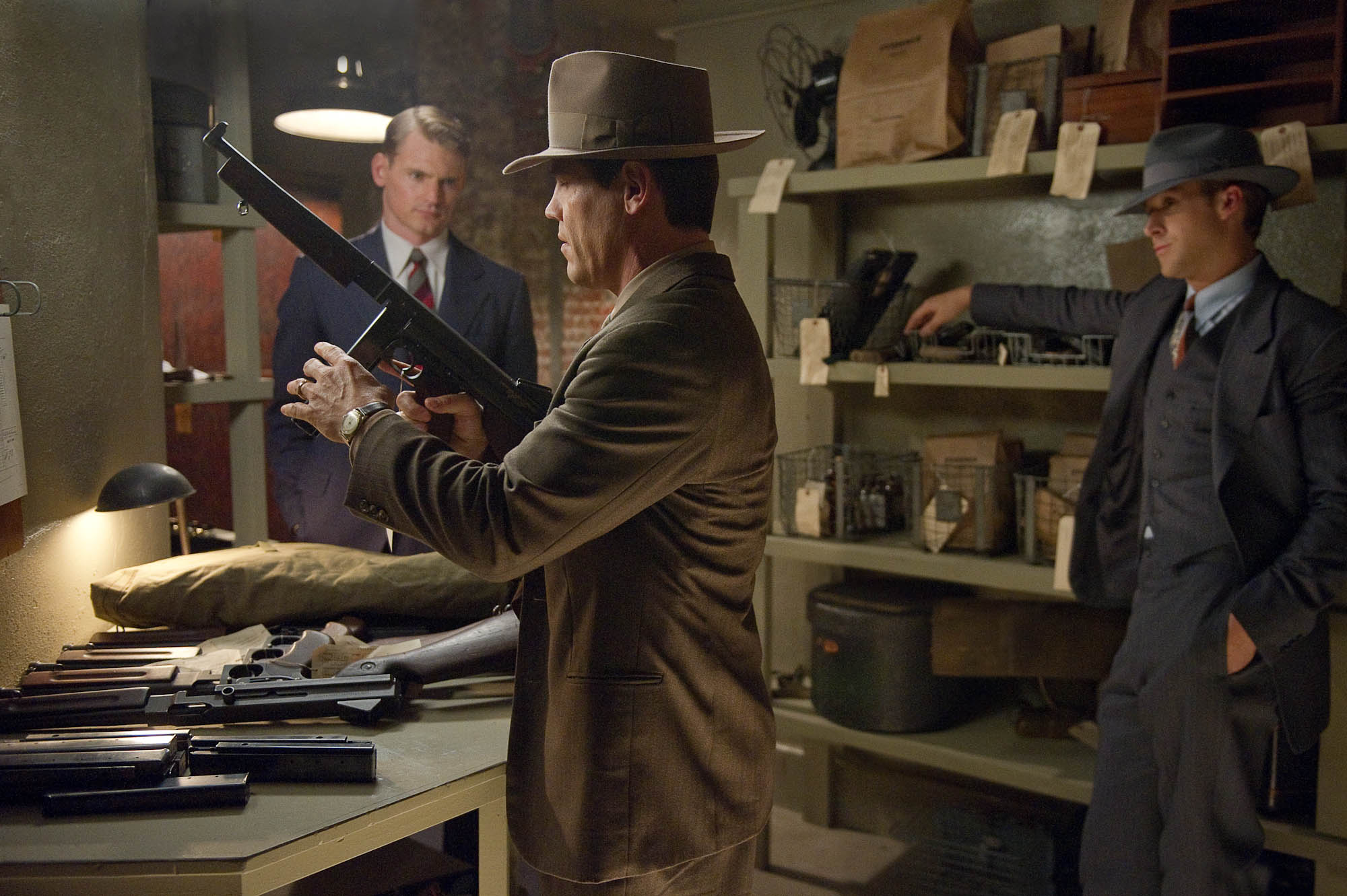
When it seems the law can no longer touch violent and powerful mob king Mickey Cohen (Sean Penn), who has many politicians and most of the LAPD on his payroll, Sgt John O’Mara (Josh Brolin) forms a secret unit of clean cops to cause a rift in the crime lord’s plans to corrupt the entire country. With his concerned and pregnant wife Connie (Mireille Enos), O’Mara hand picks a collection of character cliches: ladies man Sgt Jerry Wooters (Ryan Gosling), brainiac Det. Conway Keeler (Giovanni Ribisi), sharp shooter Det. Max Kennard (Robert Patrick), the token minority group representatives who are given the least amount of screen time and development (Michael Pena and Anthony Mackie). You get the idea. Added drama is attempted with Wooters falling head over heals for Cohen’s girl Grace Faraday (Emma Stone), a delicate, one-time Hollywood hopeful that became trapped in her boyfriend’s lifestyle. Oh, and the brief, fleeting moment in which Keeler questions the group’s actions and methods when the line between the good guys and bad guys becomes blurred.

gangster1

Gangster Squad sets a tone with some deliciously delightful era inspired puns, indicating a breezy recreation of those old Hollywood gangster films but then takes a swerve with graphic violence and melodramatic delivery of some very average dialogue. The glaring inconsistencies become a distraction. Does this want to grab us by the throat with the detailed attacks or make us laugh with Three Stooges-like botched attempts to bring justice? This is the kind of confused film that tries to get our pulses racing with a shoot out sequence only to halt it midway for a gag. It wants to have its cake and eat it too, but does not have the knowledge or expertise of when to serve it.

GANGSTER SQUAD

If the cast had anything to work with, they might have looked like they were enjoying themselves a little more. Gosling appears most at ease; his gentlemanly mannerism will melt hearts (every time he enters a room or chats to a woman, he puts his hat over his heart. Swoon.) Brolin is supposed to be carrying the story but fails to impress and Penn hams it up in the most over-the-top, cartoonish performance in the film. But Stone, who usually pops with her effervescent screen presence, is positively dull in her underwritten, after-thought role. Fleischer must have had the easiest time directing her: “Stand there. Look pretty.”

Seemingly stifled with the task of recreating the historical look, Fleischer offers little personality to the project. Everything looks great, inauthentic but passable to anyone who is not up on 1940s fashion and design and the action is acceptable. But there is little else to put this above the pack. Gangster Squad is slick but hollow entertainment, that will likely encourage you to dig around to uncover some of cinema’s more golden entries in the genre.